
Helping a Parent With Memory Changes: A Neuro Recall Caregiver Guide
Quick answerStart with a calm talk and a doctor visit, not a pill. Write down what you have noticed, with dates. Bring every medicine and supplement bottle to the visit. Ask the doctor before adding any memory supplement, Neuro Recall included, since some ingredients mix badly with blood thinners and diabetes medicine. Sudden confusion or trouble speaking means call 911.
- Refund terms shown at checkout
- Shipping cost shown before you pay
Early signs of dementia: what should you write down?
Most adult children notice small things first. A parent repeats a story in one call. A bill is paid twice. A favorite recipe comes out wrong. These moments are worth writing down, with the date and what happened.
The Alzheimer's Association lists ten early signs that mean a person should see a doctor (Alzheimer's Association, 10 warning signs). The table puts each one next to a change that is often just part of getting older. Use it as a guide for your notes, not as a test.
| Warning sign to note | What it can look like | Often a normal age change instead |
|---|---|---|
| Memory loss that disrupts daily life | Asking the same question again and again; new reliance on notes for everything | Forgetting a name, then remembering it later |
| Trouble planning or solving problems | Cannot follow a familiar recipe or keep track of monthly bills | An occasional mistake in the checkbook |
| Trouble with familiar tasks | Gets lost driving to a store visited for years | Needing help with a new phone setting |
| Confusion with time or place | Loses track of the season or how they got somewhere | Briefly unsure if it is Tuesday, then sorting it out |
| Trouble with images and space | Misjudges distance, has trouble reading or with balance | Vision changes from cataracts |
| New problems with words | Stops mid-sentence; calls a watch a hand clock | Sometimes reaching for the right word |
| Misplacing things and losing the trail | Puts keys in the fridge and cannot retrace steps | Losing glasses now and then and finding them |
| Poor judgment | Gives large sums to phone callers or strangers | One bad decision once in a while |
| Pulling away from people | Quits a club or hobby they loved | Feeling tired of social plans some weeks |
| Changes in mood or personality | New fear, suspicion or confusion, upset easily | Irritation when a routine is broken |
- 10early warning signs worth writing down
- 1notebook for dates and examples
- 911for sudden confusion or trouble speaking
How do you start the talk with your parent?
A gentle talk works better than a list of mistakes. Pick a quiet time, in private, when no one is rushed. Lead with care, not with proof. A parent who feels cornered may deny everything.
Many families find it easier to frame the visit as a general checkup. Memory changes can come from things a doctor can treat, such as low vitamin levels, thyroid problems, poor sleep, low mood or a medicine side effect. That is a hopeful reason to go.
Choose the moment
A calm morning at home beats a holiday dinner. Keep it one to one.
Use I statements
Say I have been worried, not you keep forgetting. Share one or two examples.
Name the hopeful part
A few reasons for forgetfulness respond to treatment, and a checkup is how you learn which.
Offer real help
Offer to book the visit, drive, sit in and take notes.
If the first talk goes badly, let it rest. Try again in a week or two. Some parents agree more easily when a trusted friend, a sibling or the family doctor raises it.
What should you pack and ask at the memory appointment?
A memory visit is often short, so preparation matters. The doctor will want to know what changed, when it started and how fast it is moving. Your notes are the most useful thing you can bring.
Questions many caregivers forget to ask
- Ask whether any current medicine could affect memory or alertness
- Ask whether a vitamin B12 blood test makes sense
- Ask about hearing and vision checks, since both affect daily thinking
- Ask what changes would mean calling before the next visit
- Ask whether a memory supplement is safe with the current medicine list
How do you build a medication list that doctors can use?
A full medication list protects your parent in every clinic, pharmacy and emergency room. Older adults often see several doctors, and each one may not know what the others prescribed. Supplements are easy to forget when the list is made.
Keep the list on one page. Update it every time something starts or stops. Put a copy in the wallet and one on the fridge. The sample rows below show the level of detail that helps.
| Item | Dose and time | Why it is taken | Who started it | Notes for the doctor |
|---|---|---|---|---|
| Blood thinner (example) | As prescribed, evening | Heart rhythm | Cardiologist | Ask before any ginkgo product |
| Diabetes pill (example) | With breakfast and dinner | Blood sugar | Family doctor | Ask before berberine, chromium or alpha lipoic acid |
| Thyroid pill (example) | Morning, empty stomach | Thyroid | Family doctor | Chromium may lower absorption |
| Memory supplement | 2 capsules a day | Self-started | No one | Bring the bottle so the label can be read |
| Vitamin B12 or multivitamin | Daily | Self-started | No one | Count total B12 and folic acid |
Our guide to reading a memory supplement label shows how to copy the key numbers from any Supplement Facts panel onto this list.
Memory supplements for seniors: what should you ask first?
Many seniors try a memory supplement before they tell anyone. If your parent already has one, do not argue about it. Bring the bottle to the doctor and let the label speak. If they are thinking about one, these are the questions to ask first.
Five questions before any memory supplement
First, does it mix with the medicines on the list? Second, is any amount far above what a person needs? Third, is the dose of each herb printed, or hidden in a blend? Fourth, was the product itself ever tested in people? Fifth, who sold it, and was it found through a celebrity ad?
How those questions apply to Neuro Recall
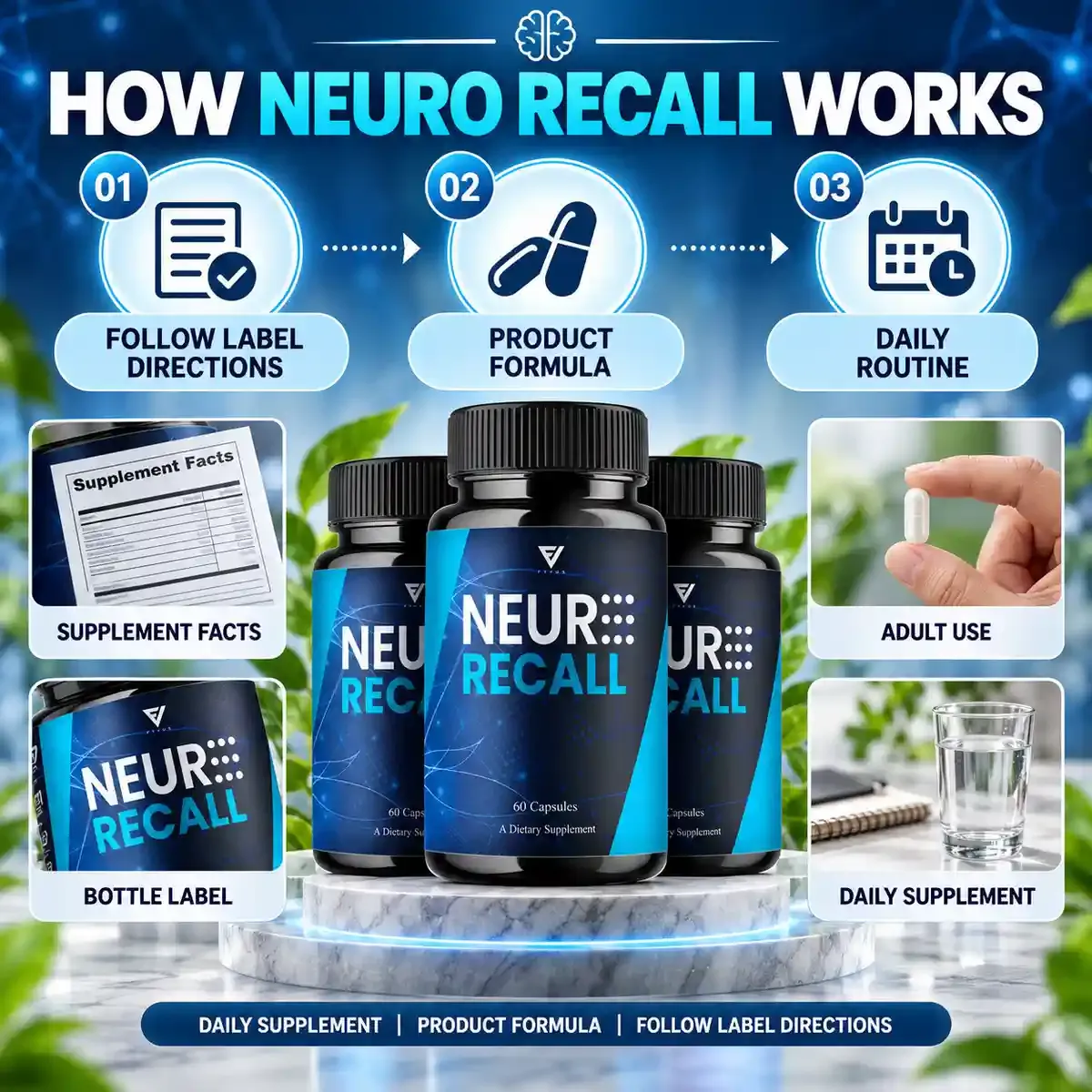
Neuro Recall is a capsule supplement for adults, taken as 2 capsules a day. It lists vitamin B12, folate, magnesium and chromium, plus a 635 mg blend of ten herbs and nutrients. You can see each one on our ingredients page. It does not treat memory loss or dementia.
Ginkgo is second in the blend, and NCCIH says ginkgo may raise bleeding risk with blood thinners (NCCIH, Ginkgo). Read more on our ginkgo biloba page. Chromium, berberine and alpha lipoic acid may lower blood sugar. Expecting or breastfeeding? The bottle says to skip it. Our side effects page lists what to watch for.
Honest note
Ginkgo did not lower dementia rates in a six-year trial of over 3,000 older adults (Snitz et al., JAMA 2009). Bacopa in Neuro Recall is at most about half the dose used in studies. There is no published study of the Neuro Recall capsule as a whole. A caregiver should weigh that before buying, and the doctor should have the final say.
A simple first step
The B12 in Neuro Recall matters most for someone who is low. Ask for a blood test first. Our post on getting a B12 test before memory supplements explains why.
When is a memory change an emergency?
Slow change over months calls for a planned visit. Sudden change is different. The CDC says sudden numbness or weakness, sudden confusion, trouble speaking, trouble seeing or walking, or a severe headache can be signs of a stroke (CDC, Stroke signs).
Sudden confusion, slurred speech or one-sided weakness
Call 911 right away. Note the time the symptoms started. Let the ambulance crew do the driving, and do not sit and wait for it to ease.
Put the stroke signs on the fridge next to the medication list. Make sure anyone who visits your parent knows them too.
How do you protect a parent from fake memory pill ads?
Older adults are frequent targets of health ads that look like news. The Better Business Bureau warns that scammers now use AI to make fake celebrity videos that seem to praise a product (BBB, AI celebrity scams). Seeing a star on screen does not mean that star ever agreed to sell anything.
In September 2026, MalwareTips reported that ads for “Neuro Recall” used fake AI videos of celebrities, and that the order button led to a checkout for a different product called MemoHoney (MalwareTips, Sept 2026). This site does not run those ads, and no celebrity endorses Neuro Recall. Our ad check page walks through how to test an ad.
Agree on a family rule
No health purchase from a video ad without a call to you or the doctor first.
Check the checkout name
The product name on the checkout must match the bottle and the label. If not, do not pay.
Watch the card statement
Look for repeat charges you did not expect. Call the card issuer if something is wrong.
How do you take care of yourself as a caregiver?
Helping a parent through memory changes is tiring. You will do it better if you rest and ask for help. Share tasks with siblings, even small ones like calling the pharmacy. Keep one shared notebook or document so no one repeats work.
Look after your own sleep, meals and checkups. Local aging services, faith groups and support lines can point you to respite care and caregiver groups. You do not have to do this alone.
Neuro Recall caregiver FAQ: helping a parent with memory loss
How do I help my mom or dad with memory loss?
Begin by writing down what you see and booking a doctor visit together. Keep the tone kind and private, and offer to come along and take notes.
Which changes in Mom or Dad could be early dementia signs?
The Alzheimer's Association lists signs such as memory loss that disrupts daily life, trouble planning, confusion about time or place and new problems with words. One sign alone is not a diagnosis, but it is a reason for a checkup.
Is it normal for a 75-year-old to forget things?
Some forgetting is common with age, such as a name that comes back later. Forgetting that keeps a person from paying bills, cooking or getting around is not something to wait out.
Should I go with my parent to the doctor about memory?
Yes, if your parent agrees. A second person can describe changes the patient may not notice and can write down what the doctor says.
What should I bring to a memory appointment?
Bring a list of the changes you noticed with dates, every pill bottle including vitamins and supplements, and a short list of questions. Insurance cards and a list of other doctors help too.
Are memory supplements safe for seniors?
Some are not safe for everyone. Ginkgo may raise bleeding risk with blood thinners, and several common ingredients can lower blood sugar, so the doctor should see the label first.
Can a vitamin deficiency cause memory problems in older adults?
Yes. NIH says low vitamin B12 can cause confusion and memory problems. Ask the doctor whether a B12 blood test makes sense.
How can I stop my parent from buying pills from fake ads?
Explain that celebrity videos can be made with AI and are not proof of anything. Agree on a simple rule: no health purchase from an ad without a call to you or the doctor first.
What if my parent refuses to see a doctor?
Try again later with a different reason, such as a yearly checkup or a medicine review. Ask the primary care office for advice, and stay calm and patient.
Doctor first, label second. Then decide.
If your parent's doctor is fine with it, read the full Neuro Recall label and check the price and refund terms on the checkout before anyone pays.