How Does NeuroRecall Work? The Four Nutrients and the 635 mg Blend Explained
Quick answerNeuro Recall does not have a proven way of working, because the capsule itself has never been tested. The label sets four nutrients beside a 635 mg blend that holds ten items. Each item has been studied for something, mostly not memory. This page explains what each one is and what the studies found.
What is in a Neuro Recall serving?
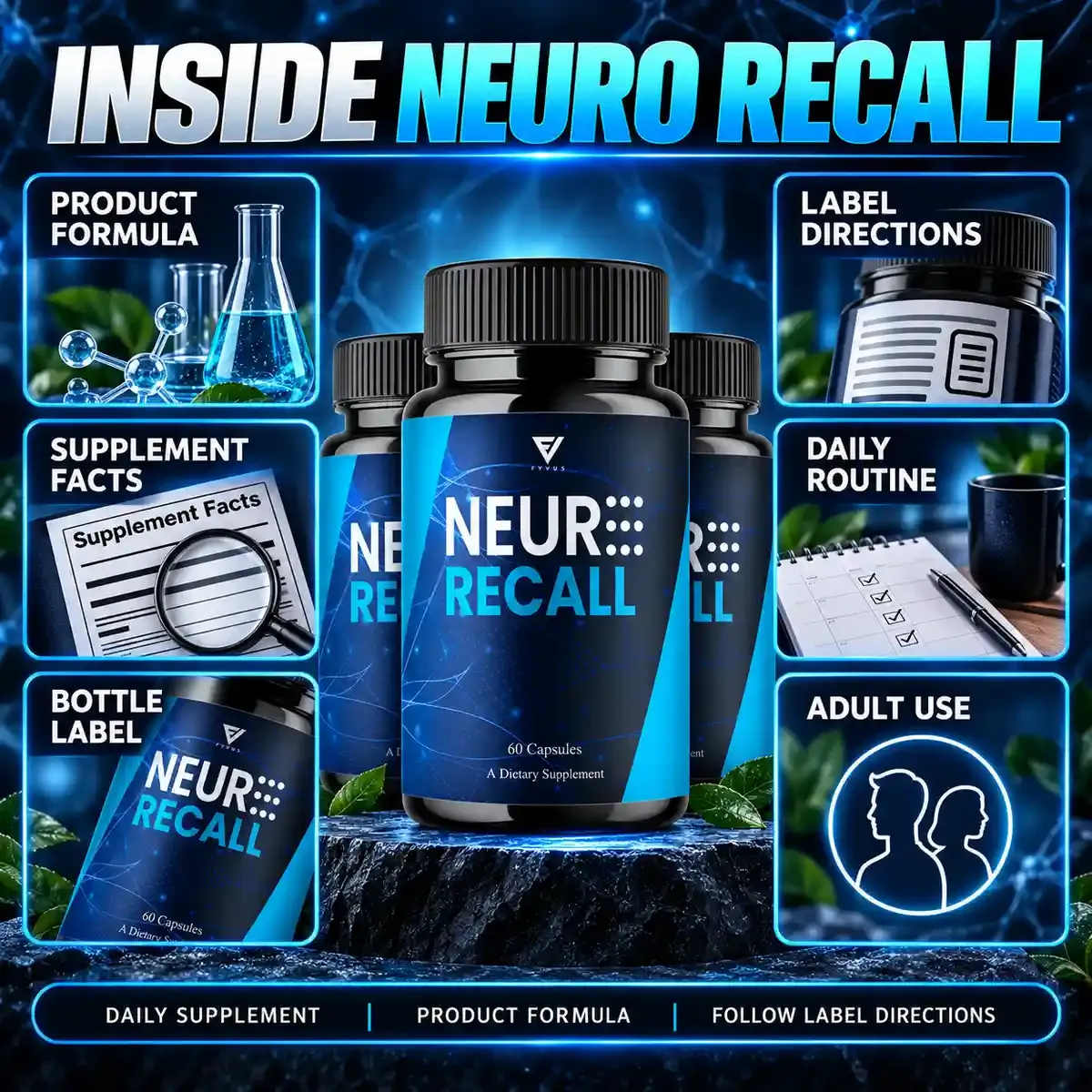
Start with the arithmetic. One serving is 2 capsules, and a bottle has 60 capsules, which makes 30 servings. Everything on the Supplement Facts panel is stated per serving, not per capsule.
The panel has two layers. The top layer is four nutrients with an exact amount and a percent of the Daily Value. The second layer is a single blend called WMG-NVT Exclusive Blend, at 635 mg, with ten names under it.
What are the key facts about the formula?
Key facts
- Each serving is 2 capsules; a full bottle gives 30 of them.
- Four nutrients carry exact amounts: 600 mcg DFE of folate, 240 mcg of B12, 250 mg of magnesium and 120 mcg of chromium.
- A 635 mg blend holds ten items, listed from the heaviest to the lightest.
- Only cinnamon has a floor on its amount, at least 63.5 mg. The other nine only have ceilings.
- Most of the herbs were studied for blood sugar, eyes or attention, not for memory.
- No study of the whole formula has been published, so how it works as one product is unknown.
What is each Neuro Recall ingredient studied for?
This table reads the label top to bottom. The amounts for the blend items are ceilings worked out from label order, not printed figures.
| Ingredient | Amount in one serving | Studied for |
|---|---|---|
| Folate | 600 mcg DFE (150% DV) | Healthy blood cells; high folic acid can hide low B12 |
| Vitamin B12 | 240 mcg (10,000% DV) | Memory and nerve health in people with low B12 |
| Magnesium (oxide) | 250 mg (60% DV) | Muscle, nerve and heart function |
| Chromium (picolinate) | 120 mcg (343% DV) | Blood sugar control |
| Cinnamon bark extract | At least 63.5 mg | Blood sugar; no condition clearly helped |
| Ginkgo biloba leaf extract | Up to 317.5 mg | Memory and dementia prevention; no benefit found over about six years |
| Bilberry fruit extract | Up to 211.7 mg | Eyesight and circulation; not clearly shown to help |
| Bacopa monnieri extract | Up to 158.8 mg | Attention and learning; small gains in attention speed |
| Green tea leaf extract | Up to 127 mg | Weight, heart, alertness; rare liver injury from pills |
| Berberine HCl | Up to 105.8 mg | Blood sugar and cholesterol |
| L-theanine | Up to 90.7 mg | Calm, sleep and focus; limited human data |
| Alpha lipoic acid | Up to 79.4 mg | Blood sugar and nerve pain |
| GPC choline (alpha-GPC) | Up to 70.6 mg | Thinking in older adults; benefit unclear for healthy adults |
| Lutein and zeaxanthin | Up to 63.5 mg combined | Eye health |
What do the four set nutrients do?
These four are the only lines with exact amounts. They are also the best understood.
B12 is the one with a direct link to memory. When it runs low, confusion and trouble remembering can follow. (NIH ODS, Vitamin B12) The capsule holds 240 mcg, while adults need 2.4 mcg a day. If you are low, that helps. If you are not, extra is not shown to do more.
Folate comes from 320 mcg of folic acid. It sits under the 1,000 mcg limit, but a multivitamin adds to the total. (NIH ODS, Folate) Magnesium oxide at 250 mg is the likeliest cause of loose stools. Chromium at 120 mcg can push blood sugar lower with diabetes medicine. (NIH ODS, Chromium)
How much of each herb is in the blend?
The label does not say. It gives one total, 635 mg. Federal rules allow that, as long as the items are listed from heaviest to lightest. (21 CFR 101.36)
That order gives us a rule. An item sitting in place n cannot weigh more than 635 divided by n. So ginkgo, in second place, tops out at 317.5 mg. Bacopa, in fourth place, tops out at about 158.8 mg. Cinnamon, in first place, is at least 63.5 mg.
Ten items sharing 635 mg means most of them can only be present in small amounts. The real split could be quite different from the ceilings, and the label will not tell you.
Which blend items were ever studied for memory?
Only a few. Ginkgo was tested in a trial of 3,069 older adults over a median of 6.1 years, and it did not lower dementia rates. (Snitz et al., JAMA 2009) Bacopa, in nine pooled trials, gave small gains in attention speed at about 300 mg a day after 12 weeks or more. (Kongkeaw et al., 2014)
Alpha-GPC has been studied for thinking in older adults, but the benefit for healthy adults is unclear. (WebMD, Alpha-GPC) L-theanine has limited human data. (MSKCC, L-theanine) Berberine and alpha lipoic acid are studied mainly for blood sugar. Lutein and zeaxanthin come from an eye study that used 10 mg and 2 mg a day. (NEI, AREDS and AREDS2)
Does the formula work as a whole?
Nobody knows. A mix can behave differently from its parts, for better or worse, but that has to be tested. No one has tested this mix.
So when an ad explains "how it works" in a neat three-step story, it is selling a story. The honest version is shorter. It has a vitamin base that matters if you are low, and a herb blend whose parts have mostly weak or unrelated evidence.
What does the bottle not claim?
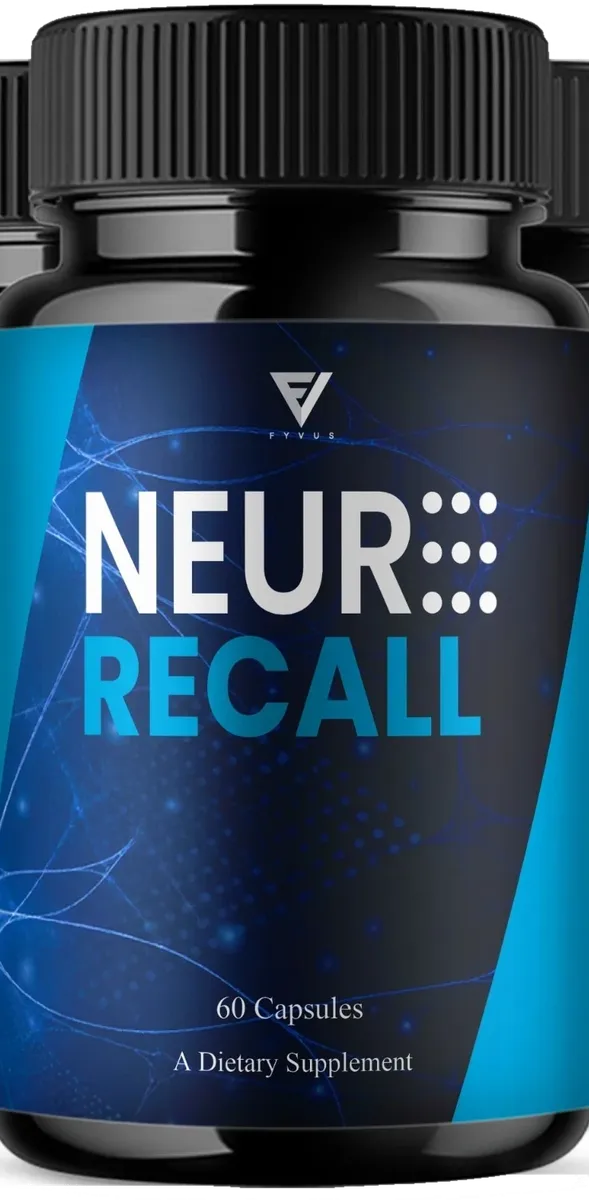
The front label says the product name, "60 Capsules" and "A Dietary Supplement". It makes no memory, focus or energy claim. Brand graphics use wellness words, but those words are not printed on the bottle.
Not FDA approved
Neuro Recall is a dietary supplement. It is not FDA approved, and no supplement is. The bottle says: "*These statements have not been evaluated by the Food and Drug Administration. This product is not intended to diagnose, treat, cure, or prevent any disease."
Frequently asked questions
How does Neuro Recall work in the brain?
No one has shown that it does. No trial of the capsule exists. Each ingredient has been studied alone for goals like attention, blood sugar or eye health, and those results do not prove how the mix acts.
What is the Neuro Recall ingredients list?
It lists four nutrients with set amounts, then one 635 mg blend: cinnamon, ginkgo, bilberry, bacopa, green tea extract, berberine, L-theanine, alpha lipoic acid, alpha-GPC, and lutein with zeaxanthin.
Why is the order of the ingredients important?
Blend items must be listed from the heaviest to the lightest. That lets you work out a ceiling: an item in place n weighs no more than 635 mg divided by n.
Does Neuro Recall have more B12 than I need?
Yes, by a lot. A serving has 240 mcg and adults need 2.4 mcg a day. That helps people who are low, and it has not been shown to help people who are not.
Is there caffeine in Neuro Recall?
The label lists no caffeine amount, but it does contain green tea leaf extract. Avoiding caffeine? Put the question to the order desk first.
Does Neuro Recall contain phosphatidylserine or rhodiola?
Not on the label in the brand images. Pages that list them are describing a different formula.
What are the four nutrients on the Neuro Recall label?
The label lists folate, vitamin B12, magnesium and chromium beside the 635 mg blend. Read the full label on the bottle or the official site, and check it against your medicine list with a doctor.
How many items are in the Neuro Recall 635 mg blend?
The 635 mg blend holds ten items, listed in order of amount. Ginkgo is second and bilberry third. The label does not print an exact amount for each item, so a serving can hold up to the figure shown.
Our view
Our view is that the question "how does it work" has a modest answer. The vitamin base has a clear purpose for people with a shortfall. The herb blend is a set of small amounts with mostly unrelated research behind it.
Nothing here calls for alarm. It does call for modest hopes, a check of the interactions, and a habit of putting sleep, movement and a doctor visit ahead of any bottle.